Discover the complete sawmill process - how raw logs are debarked, sawn, dried, graded, and finished into construction-grade timber, furniture-grade lumber, firewood, and sawdust at a modern Gujarat sawmill.
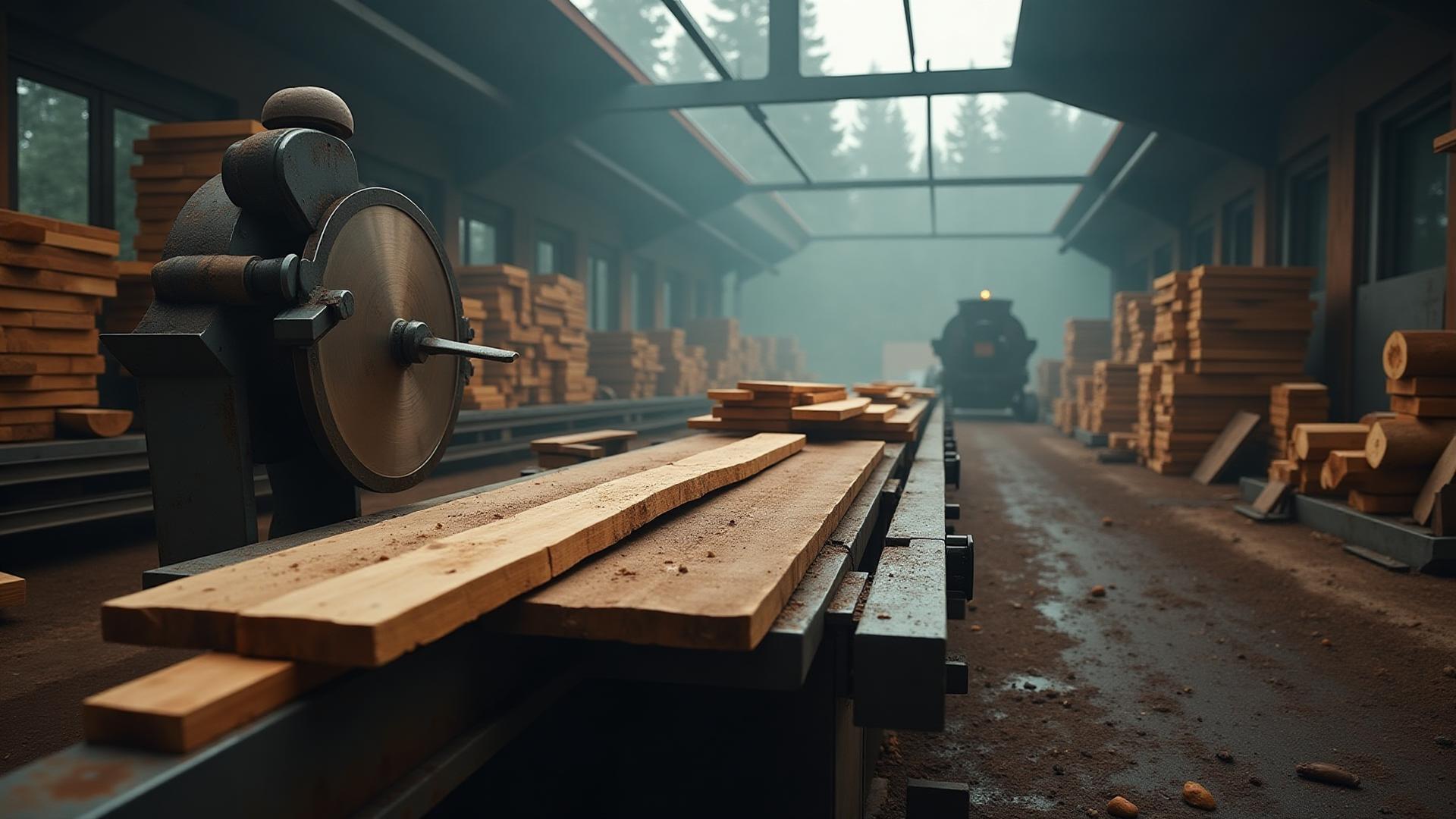
What Is a Sawmill and How Does It Work?
A sawmill is a facility that converts raw timber logs into usable wood products - planks, beams, boards, and specialty cuts. Modern sawmills like AB Sawmill in Gujarat combine traditional woodworking expertise with precision machinery to deliver consistent, high-quality output at scale.
Understanding the sawmill process helps you as a buyer know what to expect in terms of quality, moisture content, dimensions, and lead times. Here is a step-by-step breakdown of how wood is processed from raw log to finished timber.
Step-by-Step: The Sawmill Process
- 1. Log Procurement and Sorting: Logs arrive at the sawmill from timber forests or licensed wood depots. They are sorted by species, diameter, straightness, and quality grade. Only logs that meet minimum quality thresholds proceed to the next stage.
- 2. Debarking: The outer bark is removed from the log using debarking equipment. Debarking protects saw blades from damage caused by embedded stones and dirt in the bark, and is essential before any sawing begins.
- 3. Log Breakdown (Primary Sawing): The debarked log passes through the primary saw - typically a band saw or frame saw - which makes the initial cuts. This converts the round log into flat-sided cants (partially sawn logs) or primary boards depending on the intended product.
- 4. Secondary Sawing (Resawing and Edging): Cants and primary boards go through secondary saws to achieve specific widths, thicknesses, and custom dimensions. At AB Sawmill, custom cutting lists are processed at this stage - every piece is cut to the exact dimensions specified by the client.
- 5. Trimming and Crosscutting: Boards are trimmed to standard or custom lengths and cross-cut to remove defects such as knots, splits, or wane (uneven edges). This maximises the usable yield from each log.
- 6. Drying (Air Drying or Kiln Drying): Green timber (freshly cut wood) contains high moisture content - often 40–60%. Drying reduces this to the required level: 8–14% for furniture-grade timber, 15–18% for construction-grade. Kiln drying is faster (days to weeks) than natural air drying (months) and produces more consistent results.
- 7. Grading and Quality Inspection: Every batch undergoes visual grading (checking for knots, cracks, warping, and discolouration) and moisture meter testing. Timber is classified into grades: premium/furniture grade, construction grade, or packaging grade.
- 8. Finishing (Optional): Depending on the application, timber may be planed, sanded, or treated with preservatives. Treatment options include termite protection, fire retardant application, and weather resistance coatings.
- 9. Packaging and Dispatch: Graded timber is bundled, labelled with species, grade, and dimensions, and packed for transport. AB Sawmill delivers across all major Gujarat cities - Ahmedabad, Surat, Vadodara, Rajkot, Bharuch, and more.
What Happens to Wood Waste at a Sawmill?
Modern sawmills like AB Sawmill minimise waste through careful log breakdown planning and by converting all by-products into useful materials:
- Sawdust: Used as biomass fuel, for particle board and MDF manufacturing, and as agricultural mulch or animal bedding.
- Wood chips: Used in paper manufacturing, biomass energy, and as garden mulch.
- Off-cuts and slabs: Processed into firewood, pallet wood, or packaging material.
- Bark: Used as biomass fuel or garden mulch.
Why Quality at Every Stage Matters for Your Project
The quality of timber you receive is a direct result of quality at every stage of the sawmill process. Poorly debarked logs damage saw blades and cause inconsistent cuts. Improper drying causes warping, cracking, and shrinkage after delivery. Inadequate grading means you receive defective material that fails on site.
At AB Sawmill Gujarat, every stage - from log selection to final grading - follows strict quality controls. We carry out moisture checks and visual grading on every batch, so you receive timber that is ready for your site or workshop the moment it arrives.
Frequently Asked Questions
How long does it take to process timber at a sawmill?
Standard orders at AB Sawmill Gujarat are processed in 3–5 working days. Bulk or complex custom cutting lists may take 5–10 working days. Kiln drying adds time depending on initial moisture content.
What is the difference between green timber and kiln-dried timber?
Green timber is freshly cut wood with high moisture content (40–60%). Kiln-dried timber has been processed to 8–14% moisture, making it dimensionally stable and ready for furniture and joinery. Construction-grade timber is typically 15–18% moisture.
Does AB Sawmill offer log milling services in Gujarat?
Yes. AB Sawmill offers complete log milling services - converting raw logs into custom size lumber, planks, beams, and boards. We also process logs into firewood and sawdust for industrial use.
Need Expert Timber Help for Your Gujarat Project?
AB Sawmill supplies custom size timber, lumber, firewood, and sawdust across Ahmedabad, Surat, Vadodara, Rajkot & all Gujarat.